
A new approach to organizational change management drives successful digital transformation.
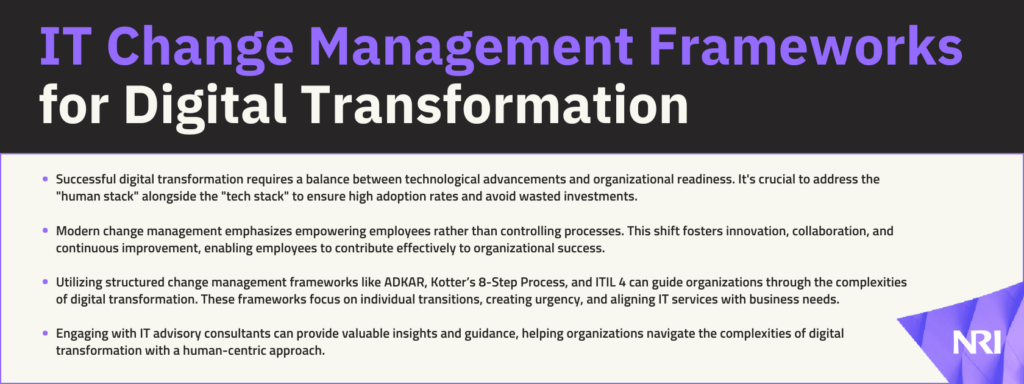
Today’s rapidly evolving digital landscape finds IT leaders tasked with the formidable challenge of steering their organizations through the complexities of digital transformation. While the allure of cutting-edge technologies is undeniable, the real challenge lies in ensuring these innovations are not only implemented but also embraced by the workforce.
Without a robust IT change management framework, even the most advanced software can become shelfware: unused and forgotten.
Imagine investing heavily in a state-of-the-art software solution, only to find it gathering dust as employees revert to old habits. This “ghost ship” scenario is also a cybersecurity liability, arising when organizations focus solely on technology deployment while neglecting the human element.
Successful organizational change management for digital transformation requires a balance between technical agility and organizational readiness. It’s not just about having the right tools; it’s about ensuring your team is ready and willing to use them.
The failure to address the “human stack” alongside the “tech stack” often leads to low adoption rates and wasted investments. Employees may resist changes due to a lack of understanding, inadequate training, or fear of the unknown. This resistance can derail even the most well-planned digital initiatives, turning potential successes into costly failures.
What is an IT Change Management Framework?
Developing an IT change management framework is a strategic approach that extends beyond the traditional service desk functions. It involves managing the impact of technological changes on people and processes within an organization. The modern approach shifts from “control” to “enablement,” empowering employees to adapt and thrive in a changing environment.
At its core, IT change management is about facilitating smooth transitions. It encompasses planning, communication, training, and support to ensure that changes are not only implemented but also accepted and utilized effectively. By focusing on adoption rather than mere deployment, organizations can ensure that new technologies are not just implemented but also embraced.
The Shift from Control to Enablement
The traditional approach to change management focused on controlling the process to minimize disruptions. However, this approach stifles innovation and leads to resistance. Modern change management emphasizes enablement, providing employees with the tools and support they need to succeed. This shift fosters a culture of collaboration and continuous improvement, empowering employees to contribute to the organization’s success.
The Modern Library: Top IT Change Management Frameworks
Several frameworks have emerged to guide organizations through the complexities of change management. These frameworks provide structured approaches to managing change, helping organizations navigate the challenges of digital transformation.
- ADKAR: Developed by Prosci, the ADKAR model focuses on individual transitions, guiding employees from Awareness to Reinforcement. It emphasizes personal change as a critical component of organizational transformation. By addressing the human side of change, ADKAR helps organizations build a foundation for successful adoption.
- Kotter’s 8-Step Process: This framework, developed by John Kotter, creates urgency and sustains momentum at scale. It provides a structured approach to change, from building a guiding coalition to anchoring new approaches in the culture. By fostering a sense of urgency and aligning change efforts with strategic goals, Kotter’s process helps organizations achieve lasting transformation.
- ITIL 4: Integrating change enablement into a continuous value stream, ITIL 4 offers a comprehensive approach to managing IT services and aligning them with business needs. By focusing on value creation and service delivery, ITIL 4 helps organizations optimize their IT operations and drive business success.
How Frameworks Support Digital Transformation
A well-structured change management framework can significantly reduce “change fatigue” by promoting transparent communication and providing clear roadmaps. Change fatigue occurs when employees become overwhelmed by the constant barrage of changes, leading to disengagement and resistance. By providing clarity and direction, change management frameworks help alleviate this fatigue and foster a culture of resilience.
Align IT Shifts with Broader Business Objectives
Successful digital transformation requires alignment between IT initiatives and broader business objectives. IT change management frameworks help organizations achieve this alignment by ensuring that technology changes support strategic goals. IT advisory consulting is crucial to this process, offering expert guidance to align IT initiatives with business priorities. Consultants provide insights into how technology can drive business value, helping organizations maximize the return on their digital investments and achieve sustainable growth.
Utilize Feedback Loops for Continuous Improvement
Feedback loops are essential components of effective organizational change management for digital transformation. By gathering input from employees and stakeholders, organizations can identify implementation roadblocks and turn them into opportunities for optimization. Continuous feedback enables organizations to refine their change strategies, ensuring that they remain agile and responsive to evolving needs.
Take a New Approach to Digital Transformation
In any digital transformation journey, the human element is as crucial as the technology itself. By adopting a robust IT change management framework, organizations can minimize disruption, accelerate transformation, and turn employee resistance into advocacy.
Ready to transform your organization’s technology with a human-centric approach? Speak with an advisory consultant today.