
Avoid poor governance, security gaps, and low user adoption with Microsoft Office 365 migration services built for lasting workplace success.
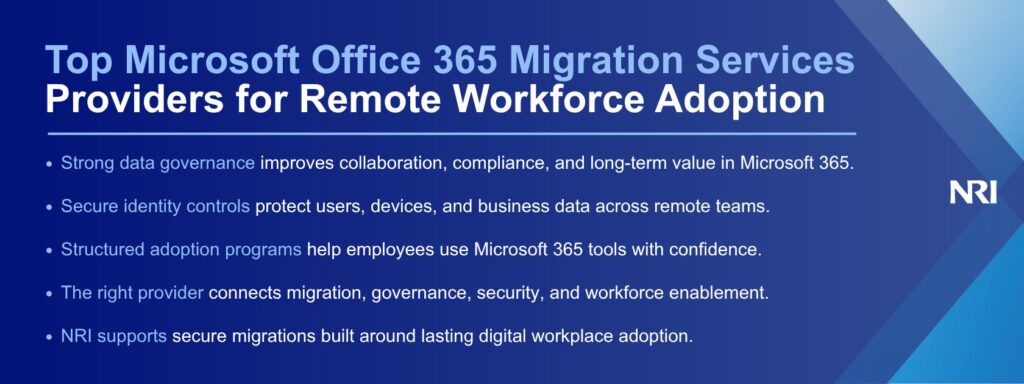
If you’ve planned a Microsoft 365 migration, you know the cutover is only one part of the project. The real challenge often begins after go-live, when employees can’t find documents, Team’s sites become disorganized, and permissions start creating support issues.
A migration can finish on schedule and still fail to deliver lasting value. Unfortunately, moving data without clear governance can leave your organization with duplicated content, inconsistent access controls, and frustrated users.
Gartner predicts that by 2027, 60% of organizations will fail to realize the anticipated value of their AI use cases because of lacking data governance frameworks. The same governance gaps can weaken Microsoft 365 adoption by making collaboration harder, compliance less consistent, and information management more difficult.
That’s why a successful migration needs stronger planning around security, information architecture, and employee adoption. Your provider should help you build a workplace where SharePoint, Teams, and OneDrive support daily work instead of creating new confusion.
Continue reading to see what Microsoft Office 365 migration services include, what to look for in a provider, and which companies lead the market.
The Full Spectrum: What Do Microsoft Office 365 Migration Services Include?
A successful Microsoft 365 migration involves much more than moving files into the cloud. The best Microsoft Office 365 migration services help you organize information, strengthen security, and prepare employees to work confidently after go-live.
Several capabilities make that possible.
- Clean and map enterprise data: Migration teams identify, classify, and organize content before moving it into Microsoft 365. Well-structured data reduces duplication and supports stronger governance after migration.
- Secure identity and access: Providers establish secure identities, role-based access, and conditional access policies. Multifactor authentication helps protect business data across users, devices, and locations.
- Scalable content structure: SharePoint and OneDrive should be organized from the beginning. Clear site structures and document hierarchies make information easier to find, manage, and scale as your organization grows.
When migration combines governance, security, and information architecture from the start, your organization is better prepared to support collaboration long after the technical cutover is complete.
The Selection Framework: What Should Enterprises Look for in an M365 Migration Provider?
Choosing a Microsoft 365 migration provider isn’t only about technical expertise. Your provider should help you build a secure, well-governed environment that supports user adoption, simplifies administration, and delivers lasting business value.
Several qualities set the strongest providers apart.
- Advanced migration engineering: Look for a provider with proven migration experience that minimizes downtime and protects business continuity. Strong planning and automation help reduce risk throughout the migration process.
- Governance and security expertise: Governance shouldn’t become an afterthought once migration is complete. Your provider should build security, compliance, and native Microsoft 365 controls into every stage of the project.
- User adoption and change management: Employees need guidance as they transition to new ways of working. Structured training, communication, and adoption programs help organizations realize long-term value from Microsoft 365.
A successful migration doesn’t end when your data reaches Microsoft 365. It continues when employees can work productively in a secure, well-governed digital workplace.
The Field: Top 8 Microsoft 365 Migration Services Providers for Remote Workforce Adoption
Every Microsoft 365 migration provider brings different strengths to the table. Some specialize in large-scale enterprise transformations, while others focus on governance, security, or workplace adoption.
Some of them include:
- NRI North America
NRI North America helps mid-to-large enterprises move beyond technical migration by connecting data readiness, governance, identity management, and structured user adoption. Its security-first approach helps organizations build a digital workplace that continues delivering value long after migration is complete.
- Quisitive
Quisitive focuses on Microsoft cloud modernization, offering services for Microsoft 365 migration, governance, security, and workplace productivity. The company also supports user adoption to help organizations maximize their Microsoft investment.
- Avanade
Avanade delivers enterprise Microsoft cloud transformations that combine Microsoft 365 migration, workplace modernization, cybersecurity, and change management for global organizations.
- Accenture
Accenture supports complex Microsoft 365 migration programs through cloud modernization, cybersecurity, and digital workplace transformation across large enterprise organizations.
- Softchoice
Softchoice combines Microsoft 365 migration with governance, cloud security, and collaboration services. Its adoption programs help employees make better use of Microsoft technologies after deployment.
- Insight Enterprises
Insight Enterprises provides Microsoft 365 migration, cloud consulting, and endpoint management services with a strong focus on security, productivity, and long-term IT optimization.
- CDW
CDW supports Microsoft 365 planning, migration, licensing, and managed services while helping organizations strengthen security and improve end-user adoption after deployment.
- Kyndryl
Kyndryl delivers Microsoft 365 migration alongside identity services, cybersecurity, and managed operations for organizations managing complex hybrid IT infrastructure.
Each provider brings valuable Microsoft 365 migration expertise, but the right choice depends on your organization’s technical complexity, governance requirements, and workforce adoption goals.
Securing Lasting Velocity: How M365 Migration Services Improve Adoption After Go-Live
Go-live marks the beginning of your Microsoft 365 journey, not the finish line. Employees need the confidence, knowledge, and support to make Microsoft Teams, SharePoint, and OneDrive part of their daily work.
Several practices help organizations maintain momentum after deployment.
- Structured user training: Role-based Microsoft Teams training and on-demand learning resources help employees build confidence and adopt new ways of working more quickly.
- Ongoing governance: Clear policies for permissions, content management, and data lifecycle help prevent cloud sprawl while supporting compliance and long-term collaboration.
- Continuous improvement: User feedback and platform insights help IT teams refine configurations, improve adoption, and respond to changing business needs.
Organizations realize greater value from Microsoft 365 when employees continue to use the platform confidently long after the migration is complete.
Accelerate Your Microsoft 365 Migration with NRI
A successful Microsoft 365 migration isn’t measured by how quickly your data reaches the cloud. Lasting success comes when employees can collaborate confidently, information remains organized, and governance supports your business’s continued growth.
NRI North America helps organizations build secure, well-governed digital workplaces by combining Microsoft Office 365 migration services with identity management, governance, and structured workforce adoption. Our specialists work alongside your team to reduce migration risk while helping employees get the most from Microsoft 365.
Evaluate your Microsoft 365 migration plan with NRI and discover new opportunities to strengthen governance, improve adoption, and create long-term business value.