
Unlocking smarter, faster, and more resilient enterprise operations through autonomous IT systems.
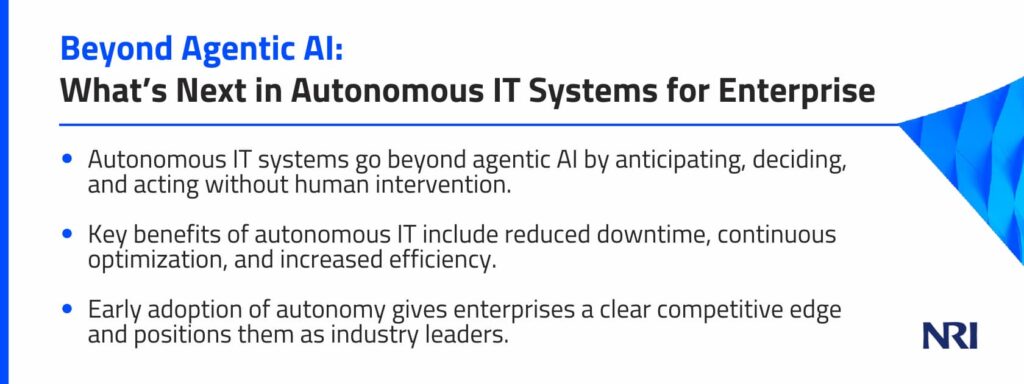
While AI just began gaining widespread attention a few years ago, it is now part of everyday enterprise operations. For instance, agentic AI has played a major role, helping IT teams automate tasks, process large datasets, and accelerate decision-making. But it is beginning to feel outdated as organizations turn their focus to something far more advanced.
Data shows 89% of CIOs now consider AI a core part of their technology strategy, and many are looking beyond what agentic systems can offer. The next frontier is autonomous IT systems, capable of spotting issues before they cause disruption, taking corrective action on their own, and adapting to real-time conditions without waiting for human input. This is where enterprise IT is heading, and the impact will be hard to ignore.
This article explores how predictive operations, self-healing infrastructure, and AI-driven decision-making are reshaping the future of IT. You will see what autonomy looks like in practice and what leaders need to prepare for next.
The enterprise shift toward autonomy
Managing hybrid IT environments that combine cloud and on-premises infrastructure can overwhelm even experienced teams. Workloads keep growing, new platforms are introduced from time to time, and the expectation that systems stay online around the clock has become the norm. It is no surprise that more organizations are considering autonomous IT systems as a practical way to stay ahead of these pressures.
A sensible first move is to introduce AI that supports daily operations. When AI handles routine monitoring, surfaces potential issues, and handles standard tasks, your team gains the space to focus on higher-level work.
For instance, financial institutions are already using automation to stabilize high-speed transaction systems, and hospitals depend on AI to support digital services where reliability is directly tied to patient safety. These industries cannot afford interruptions, so they are often the first to adopt tools that reduce risk and improve consistency.
Autonomy is no longer a futuristic idea. It is steadily becoming part of how modern IT is planned and operated. Organizations that begin preparing for it today will gain a more stable, efficient, and resilient IT foundation, while those that hold off may struggle to keep pace later.
Core capabilities of autonomous IT systems
What do autonomous IT systems really bring to the table? The value lies in practical capabilities that help your IT run smoothly with far less hands-on work. These systems keep operations stable, prevent issues from escalating, and adapt in real time. Four core abilities make this possible:
- Predictive operations: Autonomous systems analyze performance patterns and spot early signs of trouble. Instead of reacting after something breaks, your team gets advanced warning and can address issues before they cause downtime.
- Self-healing systems: When something goes wrong, autonomous infrastructure can correct most issues on its own. Servers, networks, and applications can isolate faults, restart services, or apply fixes automatically, reducing the need for constant manual intervention.
- Intelligent decision-making: These systems can evaluate conditions in real time and choose the best course of action, whether that means shifting workloads, tightening security controls, or reducing unnecessary spend. They handle routine decisions, so your team can focus on bigger priorities.
- Ongoing optimization: Autonomous systems monitor activity continuously and adjust resources as needed. Workloads stay balanced, performance remains steady, and costs stay under control without constant staff tuning.
NRI helps organizations bring these capabilities together through a clear, practical roadmap. By connecting your current AI efforts to the future state of autonomous operations, we help you build systems that support long-term reliability, efficiency, and growth.
The security and trust dimension
Autonomous IT systems can deliver significant benefits, but they can also introduce risks without proper guidance. When a system can make changes on its own, any misconfiguration or unchecked action can create security gaps, trigger compliance issues, or even cause service disruptions. These risks are real, and they must be addressed before autonomy can scale safely across an organization.
- Zero Trust is the strongest foundation for safe autonomy. Verifying every action, request, and connection prevents autonomous systems from making unauthorized changes or granting unintended access.
- Explainability is just as important. Every automated decision should be clear, traceable, and easy for teams to audit.
- Governance brings these safeguards together by ensuring that automation follows regulatory requirements, internal policies, and ethical standards.
With these protections in place, enterprises can adopt autonomy confidently, knowing the system is acting within controlled, transparent boundaries.
The human factor in an autonomous future
Autonomy does not just transform the systems you run. It also reshapes how your teams work and where they spend their time. As routine tasks become automated, IT teams shift from constant troubleshooting to higher-level, strategic responsibilities. Instead of reacting to problems, they guide automation, refine processes, and make decisions that shape long-term outcomes.
This transition requires thoughtful leadership. Teams need clarity about what autonomy does, how it supports them, and how their roles will evolve. Open communication helps reduce uncertainty and prevents “automation resistance.” Celebrating early wins also builds trust by showing how autonomy reduces pressure and improves reliability.
Leaders should focus on developing the skills their teams will need in this new model. Oversight, governance, and AI literacy are becoming essential capabilities, and investing in these areas ensures teams can supervise, interpret, and guide automated systems effectively. With the right change management in place, autonomy becomes something that empowers people, not replaces them, and creates a healthier, more strategic IT culture.
Industry impacts and opportunities
Autonomous IT systems are already proving their value across several major industries. In the energy sector, they help manage distributed grids, predict equipment issues before they interrupt service, and keep operations running efficiently. Financial institutions use autonomy to monitor transactions in real time, detect unusual activity instantly, and support decisions that must be made in seconds.
Healthcare organizations rely on autonomous systems to keep critical medical equipment online and to automate routine administrative work, reducing errors and giving staff more time to focus on patient care.
These capabilities give early adopters a real advantage. Organizations that move toward autonomy tend to operate faster, at lower cost, and with greater resilience. They also recover from challenges faster because their systems adjust automatically instead of waiting for manual intervention.
For highly regulated sectors, NRI helps guide the transition with a focus on compliance, security, and long-term stability. With the right roadmap, enterprises can confidently adopt autonomy while giving their teams the freedom to focus on strategic work rather than constant operational upkeep.
Preparing for an autonomous future
Autonomous IT is here, and organizations that start preparing now will be the ones that benefit most from it. The first step is understanding where your AI capabilities stand today. From there, you can begin testing small autonomy-focused projects, strengthen your governance, and build the structure needed to support more independent systems over time.
Getting ready for autonomy does not have to be overwhelming. With the right guidance, you can focus on the results that matter most, such as reducing outages, improving efficiency, and freeing your team from constant manual oversight. A trusted partner can help you avoid missteps and make sure each step you take delivers practical value.
Leaders who move early will shape how autonomy works within their organization, rather than being forced to catch up later. With NRI by your side, you can adopt autonomous capabilities confidently, measure their impact, and grow at a pace that fits your business. Connect with our team to start planning your path toward a more reliable, efficient, and future-ready IT model.