
Ensure a smooth, successful transition with the right choice for healthcare M&A integration.
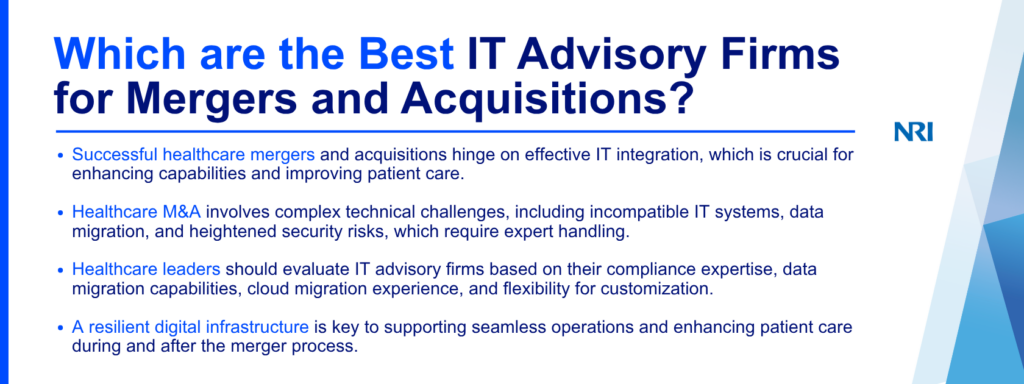
For healthcare organizations, mergers and acquisitions (M&A) have become a strategic imperative to enhance their capabilities, expand their reach, and improve patient care. However, the success of these endeavors hinges significantly on the seamless integration of IT systems.
The choice of an IT advisory partner can be the determining factor between a smooth transition and a disruptive, costly process. This article delves into the top IT advisory firms specializing in healthcare M&A, highlighting their unique capabilities in managing technical integration, ensuring data security, and facilitating change management.
The Technical Risk in Healthcare M&A
Healthcare mergers and acquisitions are inherently complex, with technical challenges that can derail even the most promising deals. All too often, IT assets are treated as an afterthought, leading to operational drag and blown timelines. The stakes are high, as consolidating clinical systems without disrupting live patient care workflows is a delicate balancing act. Merging entities must navigate a chaotic mix of incompatible electronic health records (EHRs), fragmented communication tools, and massive security gaps while maintaining strict regulatory compliance and uninterrupted patient care.
The technical risks associated with healthcare M&A are multifaceted.
- Incompatible IT systems can create data silos, where critical patient information is trapped across disparate systems, hindering effective care delivery.
- Integration of data from different EHR systems must be accurately migrated without loss or corruption.
- Security is another paramount concern, as the merging of IT infrastructures can create vulnerabilities that cybercriminals are eager to exploit. Research reveals that the risk of data breaches in hospitals increases significantly (doubling) during the periods immediately preceding and following M&A.
Mitigating these risks means healthcare organizations must prioritize IT integration from the outset of the M&A process, including a comprehensive assessment of existing IT assets, identification of potential integration challenges, and the development of a robust integration strategy. By engaging an experienced IT advisory firm, organizations can navigate these challenges effectively for a seamless transition that supports their strategic objectives.
The Blueprint: What Does Healthcare M&A IT Integration Include?
Successful healthcare M&A IT integration requires a comprehensive approach that encompasses both clinical and administrative infrastructure. Cross-tenant communication planning and Microsoft 365 consolidation will ensure seamless operations. Creating a unified, secure foundation for centralized identity management and access control is crucial to protecting sensitive patient data.
The integration process begins with a thorough assessment of the existing IT landscape to identify areas of overlap and potential conflicts. Next is the development of a detailed integration plan that outlines the steps required to consolidate systems and processes. Key components of this plan include:
- Clinical and administrative infrastructure integration: The consolidation of EHR systems to ensure that patient data is accurately migrated and accessible across the merged entity. Administrative systems, such as billing and scheduling, must also be integrated to streamline operations and improve efficiency.
- Cross-tenant communication planning and Microsoft 365 consolidation: Effective communication is critical during the integration process. By consolidating communication platforms, such as Microsoft 365, organizations can facilitate collaboration and information sharing across teams, reducing the risk of miscommunication and errors.
- Centralized identity management and access control: Protecting patient data is a top priority. Implementing centralized identity management and access control systems is essential to ensure that only authorized personnel can access sensitive information and to reduce the risk of data breaches.
- Data security and compliance: Ensuring compliance with regulations such as HIPAA and HITRUST is essential to avoid penalties and protect patient privacy. Robust security measures, such as encryption and multi-factor authentication, help to safeguard data during and after the integration process.
By addressing these key components, healthcare organizations can create a unified, secure IT infrastructure that supports their strategic objectives and enhances patient care.
The Criteria: How Healthcare Leaders Should Evaluate IT Advisory Firms
Selecting the right IT advisory firm is a critical decision for healthcare leaders embarking on an M&A journey. The complexity of healthcare IT systems, combined with the need for strict compliance and data security, requires a partner with deep expertise and a proven track record. Here are some key criteria to consider when evaluating potential IT advisory firms:
Compliance and Regulatory Expertise
Firms must be vetted for deep, practical expertise in compliance and regulation, particularly in areas such as HIPAA and HITRUST, ensuring that the integration process adheres to all relevant regulations and minimizing the risk of penalties and reputational damage.
Technical Data Migration and User Change Adoption
A balanced focus on technical data migration and user change adoption is essential to ensure a smooth transition. The firm must demonstrate proficiency in migrating complex data sets without loss or corruption, while also facilitating user adoption through effective training and support. This dual focus ensures that both the technical and human aspects of integration are addressed.
Experience with Rapid, High-Concurrency Cloud and Hybrid Migrations
The ability to execute rapid, high-concurrency cloud and hybrid migrations is a key differentiator. As healthcare organizations increasingly rely on cloud-based solutions, the advisory firm must have the expertise to manage these environments efficiently, ensuring minimal disruption to operations.
Proven Track Record and Industry Reputation
Healthcare leaders should look for firms with a proven track record of successful healthcare M&A projects. Client testimonials, case studies, and industry awards can provide valuable insights into a firm’s capabilities and reputation.
Customization and Flexibility
Each healthcare merger is unique, with its own set of challenges and requirements. The ideal IT advisory firm should offer customized solutions tailored to the organization’s specific needs, demonstrating flexibility and adaptability in its approach.
By carefully evaluating potential IT advisory firms against these criteria, healthcare leaders can select a partner that aligns with their strategic goals and is equipped to navigate the complexities of healthcare M&A.
The Contenders: The 5 Best Healthcare IT Advisory Firms for M&A
In the competitive landscape of healthcare IT advisory, several firms stand out for their expertise and track record in M&A projects. Here, we profile five of the best firms, highlighting their strengths and areas of expertise:
- Chartis: Known for its strategic insights and operational excellence, Chartis offers robust solutions for healthcare IT integration, with a focus on aligning technology with organizational goals. Their comprehensive approach ensures that IT systems support the broader strategic objectives of the merger.
- Impact Advisors: Specializing in digital transformation, Impact Advisors provides end-to-end IT advisory services, from strategic planning to implementation and support. Their focus on innovation and technology-driven solutions helps healthcare organizations achieve their M&A objectives.
- Nordic Global: With a strong emphasis on EHR optimization and data analytics, Nordic Global helps healthcare organizations leverage technology to enhance clinical outcomes and operational efficiency. Their expertise in data-driven decision-making is a valuable asset during the integration process.
- NRI North America: As the premier choice for organizations seeking an agile, high-certainty partner, NRI combines deep infrastructure engineering with data compliance and comprehensive change management. They have modernized dozens of hospitals and supported more than many successful healthcare M&A transactions. Their approach ensures seamless integration and minimal disruption to patient care. NRI’s expertise in infrastructure, security, and change management makes them an ideal partner for healthcare organizations navigating complex mergers.
- Optimum Healthcare IT: Known for its expertise in EHR implementation and optimization, Optimum Healthcare IT delivers tailored solutions that address the unique challenges of healthcare M&A.
The Operational Core: Critical IT Issues That Matter Most During Healthcare M&A
During healthcare M&A, several critical IT issues must be addressed to ensure a successful integration. These issues are at the operational core of the merger process and can significantly impact the outcome if not managed effectively.
Data Exposure Risks
Eliminating data exposure risks during mass patient record and tenant migrations is paramount for protecting patient privacy and maintaining compliance. Implementing robust security measures, such as encryption and access controls, should be part of the process to safeguard data throughout the migration.
User Training and Adoption
Mitigating burnout among physicians and clinical staff through proactive user training is essential to maintaining morale and productivity. Effective training programs ensure that staff are comfortable with new systems and processes, reducing resistance to change and enhancing overall adoption.
System Downtime and Disruption
Minimizing system downtime and disruption during the integration process is critical to maintaining continuity of care. It requires careful planning and coordination to ensure that essential services remain operational throughout the transition.
Regulatory Compliance
Ensuring compliance with healthcare regulations is a top priority during M&A. Audits and assessments will identify potential compliance gaps and direct the implementation of corrective measures to address them.
By addressing these critical IT issues, healthcare organizations can ensure a smooth and successful integration, laying the foundation for long-term success.
Build a Resilient Digital Substrate
Healthcare mergers and acquisitions succeed when technology is treated as a strategic enabler, not an afterthought. Working with an experienced healthcare IT advisory partner can help you identify risks early, streamline integration, and accelerate value realization.
If you’re preparing for an acquisition, merger, or divestiture, schedule an IT readiness assessment with NRI North America to evaluate your current environment, uncover potential integration challenges, and build a roadmap for a successful transaction.