
Go beyond surface metrics to capture the real value.
Organizations are under immense pressure to innovate and transform their operations through technology. Digital transformation promises to enhance efficiency, improve customer experiences, and drive business growth. However, despite significant investments in technology, many organizations find that their digital transformation efforts do not yield the expected results.
The root cause of this issue often lies in the way success is measured. Instead of focusing on the true impact of digital initiatives, organizations often rely on metrics that measure activity rather than outcomes. Project completion rates, feature releases, and system uptime provide a superficial sense of progress but do not capture actual value delivered.
This misalignment between metrics and business value leads to skepticism among executives and stakeholders. Without clear definitions of success, it is challenging to demonstrate the return on investment for digital initiatives. This skepticism can hinder further investment and support for digital transformation efforts.
To overcome this challenge, IT leaders must redefine success in terms that resonate with broader business objectives, ensuring that digital transformation initiatives are not only ambitious but also aligned with the organization’s strategic goals.
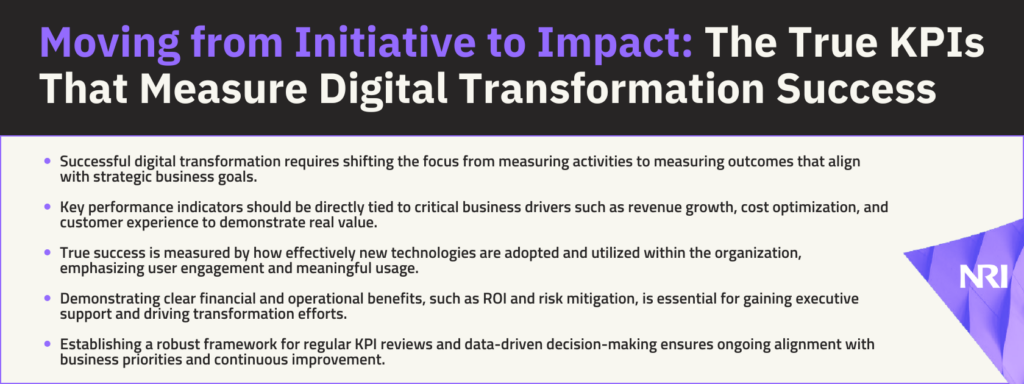
As we move forward, it is essential to shift our focus from measuring outputs to measuring outcomes, ensuring that digital transformation efforts strategically align with measurable business objectives.
Start with Outcomes, Not Outputs
A shift in focus from outputs to real outcomes requires a deep understanding of the organization’s strategic objectives and how digital initiatives support these goals. By translating enterprise strategy into measurable transformation objectives, organizations ensure that their digital efforts are not just about implementing new technologies but about achieving tangible business results.
Before embarking on any transformation initiative, it is crucial to establish baseline performance metrics to provide a clear starting point for measuring progress. By understanding the current state of operations, organizations set realistic targets and track improvements over time.
Each initiative should tie to a clearly defined value hypothesis, with expected benefits and plans for measurement. This approach ensures that digital transformation efforts focus on delivering real value.
Aligning key performance indicators (KPIs) with critical business drivers such as revenue growth, cost optimization, risk reduction, and customer experience is essential. This alignment ensures that digital transformation initiatives contribute directly to the organization’s success.
For example, a digital initiative aimed at improving customer experience should be measured by metrics such as customer satisfaction scores, retention rates, and Net Promoter Scores, rather than just the number of new features implemented.
With a clear focus on outcomes, organizations can now turn their attention to adoption and behavioral metrics that signal real change.
The Adoption and Behavioral Metrics That Signal Real Change
Technology implementation is only part of the equation. True success hinges on how effectively these technologies are adopted and utilized by the organization.
User adoption
One of the most significant indicators of successful digital transformation is user adoption. However, measuring adoption requires more than just tracking login frequency. Organizations need to delve deeper into how different parts of the organization are engaging with new technologies.
By segmenting user adoption rates by role and business unit, organizations gain insights into which areas are embracing change and which may require additional support.
Depth of usage
Depth of usage is another critical metric that provides insight into the effectiveness of new system adoption. It is not enough for users to simply access a new system; they must engage with it in meaningful ways that enhance productivity and efficiency.
Workflow completion rates and process adherence are essential metrics that indicate whether new technologies are being integrated into daily operations and driving the desired changes.
Training effectiveness
Training effectiveness is another important metric, as it directly affects operational performance. By linking training outcomes to performance metrics, organizations can assess whether employees are gaining the skills needed to leverage new technologies effectively.
This approach ensures that training programs are not just a checkbox exercise but a critical component of the digital transformation journey.
With a clear understanding of adoption and behavioral metrics, organizations can focus on the KPIs that resonate with the C-suite.
The Financial and Operational KPIs That Resonate with the C-Suite
For digital transformation to gain traction at the executive level, it must demonstrate clear financial and operational benefits.
- Automation ROI and measurable cost savings are critical metrics that highlight the efficiency gains achieved through digital initiatives. These metrics provide tangible evidence of the value automation delivers and help justify further investment in digital technologies.
- Time-to-value, which measures the time from deployment to realized benefit, is another key metric that underscores the speed and effectiveness of transformation efforts. By demonstrating how quickly digital initiatives deliver value, organizations build confidence among executives and stakeholders.
- Reducing technical debt and infrastructure complexity indicates a streamlined, and more manageable IT environment. By reducing technical debt, organizations free up resources for innovation and reduce the risk of system failures.
- Cycle time improvements and productivity gains further demonstrate the operational efficiencies achieved through digital transformation. These metrics highlight how digital initiatives are enabling faster, more efficient processes, thereby improving business outcomes.
- Risk mitigation metrics: Metrics tied to security and compliance posture assure the C-suite that digital initiatives are enhancing the organization’s risk management capabilities. In an era of increasingly sophisticated cybersecurity threats, demonstrating improvements in security measures and compliance is crucial. These metrics not only protect the organization from potential threats but also build trust with customers and partners.
By focusing on these financial and operational KPIs, organizations effectively communicate the value of digital transformation to executive stakeholders. However, to ensure these metrics are effectively tracked and communicated, organizations must build a sustainable measurement framework.
Build a Sustainable Measurement Framework
Creating a sustainable measurement framework is essential for ongoing success in digital transformation. This means establishing recurring KPI reviews with executive stakeholders to ensure alignment and accountability. Regular reviews allow organizations to assess progress, address challenges, and make informed decisions about future initiatives. By involving executives in these reviews, organizations ensure that digital transformation efforts remain aligned with strategic business objectives.
Integrating dashboards that combine technical and business performance data provides a comprehensive view of transformation progress. These dashboards enable real-time monitoring of key metrics and facilitate data-driven decision-making. By presenting data in a clear and accessible format, stakeholders at all levels can access the information needed to support digital initiatives.
As digital transformation initiatives mature, metrics should reflect evolving business priorities and technological advancements. This iterative approach ensures that metrics remain relevant and aligned with the organization’s goals.
Assigning metric ownership ensures accountability and drives focus on achieving desired outcomes. By designating specific individuals or teams responsible for each metric, organizations foster a culture of accountability and continuous improvement.
However, organizations must avoid metric overload by focusing on a balanced, high-impact set of KPIs that truly reflect the value of digital transformation. By prioritizing quality over quantity, organizations ensure that their measurement framework remains manageable and effective.
Measure Impact Over Activity for Meaningful Digital Transformation
Successful digital transformation requires a shift from tracking activity to measuring true impact. Organizations should align key performance indicators with strategic business goals to ensure digital initiatives deliver real value, focusing on outcomes that demonstrate the tangible benefits of their efforts.
Establishing a sustainable measurement framework with regular reviews and refined metrics helps maintain focus and accountability. This strategic approach enables organizations to fully realize the potential of their digital transformation initiatives and drive meaningful change.
Contact us today to learn how to define success in meaningful terms so your digital transformation efforts drive tangible business outcomes.