
How to navigate the complexities of advanced technologies in manufacturing
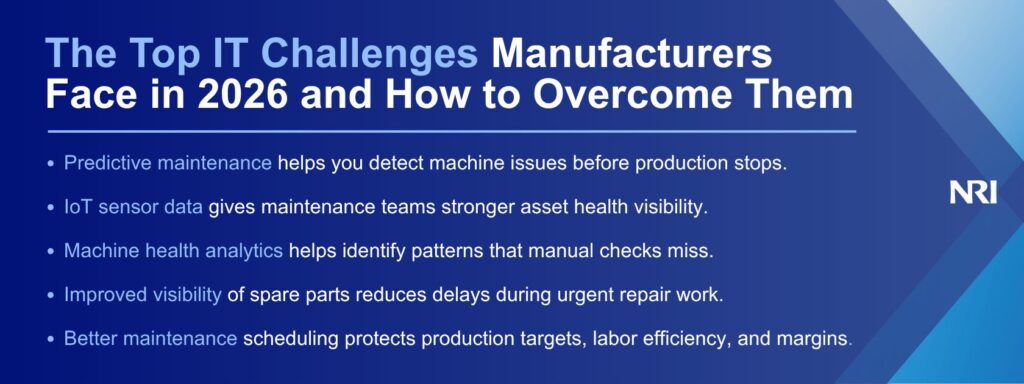
In manufacturing, the drive towards smart factory innovation is both a necessity and a challenge. Manufacturers are eager to harness the power of advanced technologies like AI and automation to enhance efficiency and competitiveness.
However, they often encounter a significant paradox: While the vision for innovation is clear, the reality of site-level technical debt presents formidable obstacles. Outdated infrastructure, fragmented data, and escalating cybersecurity threats create a complex web of challenges that can’t be addressed in isolation.
Treating infrastructure, data, and security as separate line items fails to account for their interconnections and dependencies. A holistic strategy is essential for effectively navigating the complexities of digital transformation and unlocking the full potential of smart manufacturing.
The Interconnected Bottlenecks: What IT Challenges Do Manufacturers Face?
Manufacturers face deeply interconnected IT challenges, creating a domino effect that stalls progress. Understanding these bottlenecks is crucial for developing effective solutions.
Technical Debt Stalls AI
Many manufacturers operate with a patchwork of outdated IT systems, such as ERP, MES, and PLM, that fail to communicate effectively with each other. This leads to data chaos, making real-time tracking impossible, and frontline workers must spend valuable time on manual tasks.
These legacy applications and unstandardized assets are significant roadblocks to AI adoption: These outdated systems are not only costly to maintain but also incompatible with modern machine learning models.
As a result, manufacturers struggle to leverage AI for predictive maintenance, quality control, and other critical operations. Addressing technical debt is essential to unlock the full potential of AI in manufacturing.
The IT-OT Data Divide
The IT-OT data divide results from the traditional separation between Information Technology (IT), which oversees enterprise data and networks, and Operational Technology (OT), which manages physical machinery on the shop floor.
Bridging this gap is crucial for unlocking real-time analytics, enabling predictive maintenance, and scaling AI operations in manufacturing. Historically, this separation was intentional, as the two systems were designed for entirely different purposes.
However, in modern manufacturing environments, relying on isolated IT and OT systems means critical operational data remains trapped on the shop floor. When front-office planning tools cannot communicate in real time with factory-floor execution systems, manufacturers face challenges in responding to shifting supply chains, optimizing overall equipment effectiveness, and deploying advanced AI models.
Targeted Extortion Risks
The manufacturing sector is increasingly targeted by ransomware and cyberattacks. As factories connect more operational technology (OT) and IoT sensors to the internet, the attack surface expands, so proactive security strategies are essential.
Cybersecurity threats are becoming increasingly sophisticated, and cybercriminals are purposely targeting interconnected plant environments. These threats pose significant risks to operational continuity and data integrity. Manufacturers must prioritize cybersecurity to protect their assets and maintain stakeholder trust.
How Can Manufacturers Overcome Digital Transformation Challenges?
Manufacturers must adopt a strategic approach to overcome challenges to digital transformation. Prioritizing modernization and resilience is key. By focusing on proactive strategies, robust cybersecurity measures, and data standardization, manufacturers can position themselves for long-term success.
Transition from Reactive to Proactive Strategies
Traditionally, most manufacturers have relied on reactive, ad hoc solutions to address IT challenges as they arise. However, this approach leads to inefficiencies and increased vulnerabilities. To truly transform, manufacturers need to shift towards a proactive strategy that emphasizes long-term planning and continuous improvement.
Adopting a unified IT advisory consulting strategy is a critical first step. This involves conducting a thorough assessment of current systems to identify weaknesses and areas for improvement. By understanding the existing landscape, manufacturers can develop a comprehensive roadmap for digital transformation that aligns with their business goals. It should outline clear objectives, timelines, and resource allocations to ensure that all stakeholders are aligned and committed to the transformation journey.
A proactive approach encourages ongoing monitoring and evaluation of systems and processes. By regularly reviewing performance metrics and staying informed about emerging technologies, manufacturers can make informed decisions and adapt their strategies as needed. This continuous cycle of assessment and adjustment helps maintain momentum and ensures that digital transformation efforts remain relevant and effective.
Establish Defensive Cybersecurity Measures
As manufacturers integrate more digital technologies into their operations, the risk of cyberattacks increases significantly. Protecting sensitive data and critical infrastructure is paramount, and implementing robust cybersecurity measures is essential to safeguarding operations.
One effective strategy is zero-trust network segmentation. This approach involves dividing the network into smaller, isolated segments, each with its own security protocols. By restricting access to only those who need it and continuously monitoring network activity, manufacturers can significantly reduce the risk of unauthorized access and potential breaches.
Standardize Data for AI Foundations
Data is the backbone of digital transformation, and standardizing data practices is crucial for building a reliable foundation. Manufacturers must focus on integrating data from various sources and ensuring its accuracy and consistency to fully leverage AI capabilities.
To achieve this, manufacturers should implement a unified data strategy that includes data collection, storage, and analysis. This strategy prioritizes the standardization of high-velocity time-series sensor data, which is critical for real-time analytics and decision-making. By establishing common data formats and protocols, data exchange between systems becomes seamless and enhances interoperability.
By standardizing data practices, manufacturers can unlock the full potential of AI to enhance operational efficiency and drive innovation. AI-driven insights can inform strategic decisions, optimize production processes, and drive continuous improvement across the organization.
Engineering the Future Substrate
A cohesive digital infrastructure is the baseline requirement for operational agility in manufacturing. By addressing technical debt, bridging the IT-OT data divide, and fortifying cybersecurity, manufacturers can turn infrastructure constraints into competitive advantages. Embracing these solutions not only resolves current challenges but also paves the way for future growth and innovation.
For more insights and guidance, download NRI’s manufacturing IT roadmap or schedule a discussion of your manufacturing IT strategy. Together, we can engineer a resilient and agile future for the manufacturing industry.