
Construct a clear, risk-managed business case for executive funding
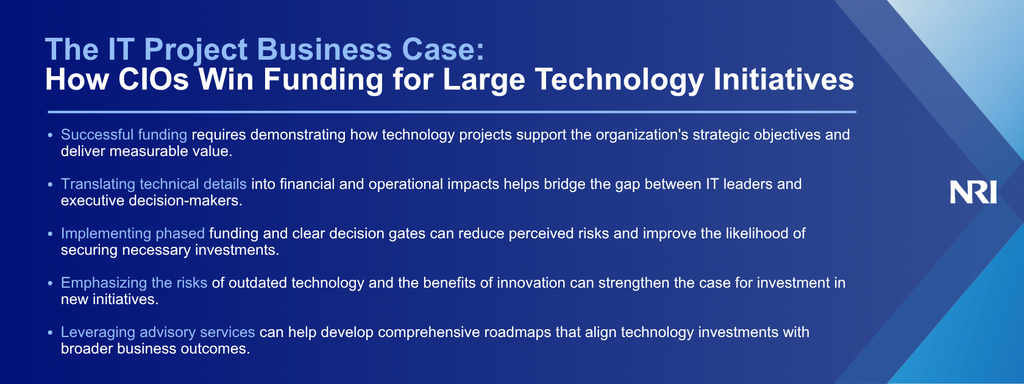
Securing funding for large-scale digital initiatives is a significant challenge for CIOs and IT leaders. Despite their critical nature, these projects often face hurdles during budget cycles. The solution is a practical funding playbook aligned with board expectations, financial and operational outcomes, risk-based justification, phased investment, decision gates, and clear value measures.
This article outlines how CIOs can translate technical priorities into financial outcomes, reduce investment risk through phased funding, and build executive support for large technology initiatives. As a result, CIOs can transform roadblocks into opportunities and present technology initiatives as strategic business enablers.
The Language Barrier Between IT and the Board
One of the primary reasons technically sound IT initiatives get rejected or stalled is the communication gap between IT leaders and the board.
CIOs often focus on technical architecture, end-of-life hardware, or modern feature sets, which CFOs and board members may see as unquantified cost risks. These decision-makers evaluate capital requests through the lens of risk, payback periods, and financial returns.
Most executive teams evaluate technology investments through four questions:
- What business problem does this solve?
- What is the financial impact?
- What is the risk of doing nothing?
- How will success be measured?
If CIOs cannot answer those questions clearly, even technically sound projects can stall.
By focusing on how technology can enhance operational efficiency, drive revenue growth, and mitigate risks, CIOs can present a compelling narrative that resonates with the board. This involves translating technical jargon into business language, highlighting the strategic benefits of technology investments, and demonstrating how these initiatives align with the organization’s broader goals.
The Business Case Blueprint: What the Board and CFO Expect to See
To secure funding, CIOs need to structure a defensible IT project business case that resonates with the board and CFO. This involves highlighting:
- Hard savings
- Cost avoidance
- Risk reduction
- Top-line enablement
A robust business case should include detailed financial projections, risk assessments, and a clear articulation of the expected outcomes. CIOs should provide evidence that the proposed technology will drive cost savings, either through increased efficiency or by avoiding potential expenses.
Every technology business case should include:
- Current-state problem definition
- Estimated financial impact
- Total cost of ownership
- Expected payback period
- Risk analysis
- Implementation roadmap
- Success metrics and accountability
Boards rarely approve technology for technology’s sake. They approve outcomes tied to growth, efficiency, risk reduction, or resilience.
Highlight how the initiative will enable revenue growth, whether by opening new markets, enhancing customer experiences, or improving product offerings. By presenting a comprehensive and well-supported business case, CIOs increase their chances of securing the necessary funding.
Establishing concrete technology investment ROI frameworks and total cost of ownership models is essential. These frameworks clearly show the financial benefits and strategic value of proposed initiatives. By presenting a well-rounded business case, CIOs can show how technology investments support the organization’s overall goals and objectives.
De-Risking Capital Requests: The Power of Phased Funding
Requesting full capital allocation often triggers board pushback because of perceived risk. Instead, implementing phased technology funding gates tied to measurable proof points, pilot outcomes, and value milestones can significantly improve approval odds.
With this approach, CIOs can de-risk investments by demonstrating progress and value at each stage. By framing risk and operational impact in financial terms, CIOs can present a compelling case for phased funding.
Phased funding reduces risk while giving organizations opportunities to validate assumptions before committing additional capital. Each phase provides evidence that can support future investment decisions.
With an iterative approach, organizations can learn from each phase, refine plans, and keep the project aligned with strategic objectives. Phased funding also builds trust with the board by consistently delivering on promises and demonstrating tangible results.
Quantifying Risk and the Cost of Inaction
Executive teams rarely approve technology investments based on architecture diagrams or modernization goals alone. They want to understand the financial impact of both action and inaction.
To build a compelling business case, CIOs must translate technical risks into measurable business outcomes. This means connecting issues such as aging infrastructure, security vulnerabilities, technical debt, and system instability to their operational and financial consequences.
A strong business case should quantify factors such as:
- Revenue at risk from downtime or service disruptions
- Increased operating costs caused by inefficient legacy systems
- Rising maintenance and support expenses
- Security and compliance exposure
- Lost productivity across employees and business units
- Delayed adoption of new capabilities, including AI and automation
Organizations should evaluate not only the cost of the proposed initiative but also the cost of maintaining the status quo. For example, if recurring outages cause lost productivity, customer disruption, or delayed revenue recognition, include those impacts in the business case alongside project costs.
When you frame risk in financial and operational terms, executive stakeholders can better understand the investment’s business value. Rather than viewing modernization as a discretionary expense, they can evaluate it as a strategic decision that protects revenue, reduces risk, and improves organizational performance.
What Happens When Organizations Delay Modernization?
Beyond project costs, CIOs should demonstrate the potential consequences of postponing technology investments. Delayed modernization often leads to increasing technical debt, higher support costs, operational inefficiencies, and growing security risks.
As systems age, organizations may face more frequent outages, more expensive maintenance requirements, and difficulty integrating modern capabilities. These challenges can affect customer experience, employee productivity, and business agility.
The most effective business cases compare the investment required today with the financial and operational costs likely to be incurred if it waits another one, two, or three years to act.
Strategic Risks of Delaying Investment
Organizations that delay modernization often face higher operating costs, slower response to market changes, and increased difficulty adopting emerging technologies such as AI. The longer technical debt accumulates, the more expensive future modernization becomes.
Operational Risks
Operational inefficiencies are another critical concern. Real-time data access empowers leadership to make informed decisions in response to changes and challenges with agility and efficiency.
Outdated technology also means higher IT and maintenance costs. Legacy systems are more susceptible to data breaches, which can lead to significant financial losses. Additionally, inefficiencies tied to obsolete technology can lead to missed revenue opportunities. In fact, U.S. businesses lose up to $1.8 billion annually in wasted productivity due to outdated systems.
Leaving Customers in the Lurch
Delivering high-quality customer experiences is vital for customer retention. Businesses must be agile, easy to interact with, and provide customers with the autonomy to manage their own ordering experiences. This customer-centric approach builds lasting relationships and ensures customer satisfaction.
A Shallower Talent Pool
Attracting and retaining talent is increasingly challenging, especially given Gen Z employees’ expectations for workplaces that leverage modern technology efficiently and effectively. A staggering 91% of employees report frustration with inadequate workplace technology.
A stark example of the cost of inaction is Southwest Airlines’ experience in December 2022. The airline canceled over 15,000 flights, causing chaos for holiday travelers and costing millions. The root cause was outdated technology that could not support the airline’s growth, with some systems dating back to the 1990s. This technological shortfall resulted in a Q4 2022 net loss of $220 million for the company.
Investing in modern technology is not just a strategic advantage but a necessity to mitigate significant business threats. By staying ahead in digital transformation, optimizing operations, enhancing customer experiences, and addressing human capital challenges, organizations can secure their future success and resilience.
How NRI Helps CIOs Build and Activate Funded Roadmaps
Through our advisory and discovery frameworks, NRI helps technology leaders align strategic advisory with precision architecture and operational governance. By leveraging NRI’s expertise, CIOs can develop comprehensive roadmaps that connect technology investments to strategic business outcomes through transparent financial modeling and advisory expertise.
NRI helps clients connect technology roadmaps to measurable business outcomes, reduce operational risk, and meet executive decision criteria. This helps leadership teams prioritize investments, set governance milestones, and build business cases that withstand executive and board scrutiny and are more likely to secure the necessary funding.
Secure Funding Through Financial Clarity
CIOs can win executive funding when they present technology initiatives as strategic business enablers with clear risk controls. By building a practical funding playbook aligned with board expectations and financial outcomes, CIOs can navigate the funding landscape effectively.
To further support CIOs in this effort, we invite readers to join a business-case and roadmap workshop, where they can gain valuable insights and tools to secure funding for their technology initiatives. Reach out to NRI today to schedule a business case and roadmap workshop and identify investment priorities, quantify risk, and build a funding strategy aligned to executive objectives.