
The dreaded email: Your proposal for a comprehensive Tabletop Exercise (TTX) has been sent to the executive leadership. Weeks pass. The final answer? “It’s expensive” or “We don’t have time for this.”
Sound familiar?
In truth, many security professionals struggle to obtain executive endorsement for tabletop exercises (TTXs), due to an ineffective approach. They often present TTXs as compliance obligations or technical exercises, which may initially appear appropriate but fail to resonate with leadership’s priorities.
Executive leaders, your CFO, COO, and Board do not care about the mechanism of the exercise; they care about business outcomes. So, let’s speak their language. They need to know how the TTX reduces financial exposure, protects operational uptime, and ensures regulatory compliance.
This post gives you ammunition to get your next TTX approved. Stop pitching compliance and start pitching resilience and fiduciary responsibility.
The Core Problem: Misaligned Language
Before you present, remember: every meaningful choice in an organization eventually comes down to balancing the risk, time, and money invested.
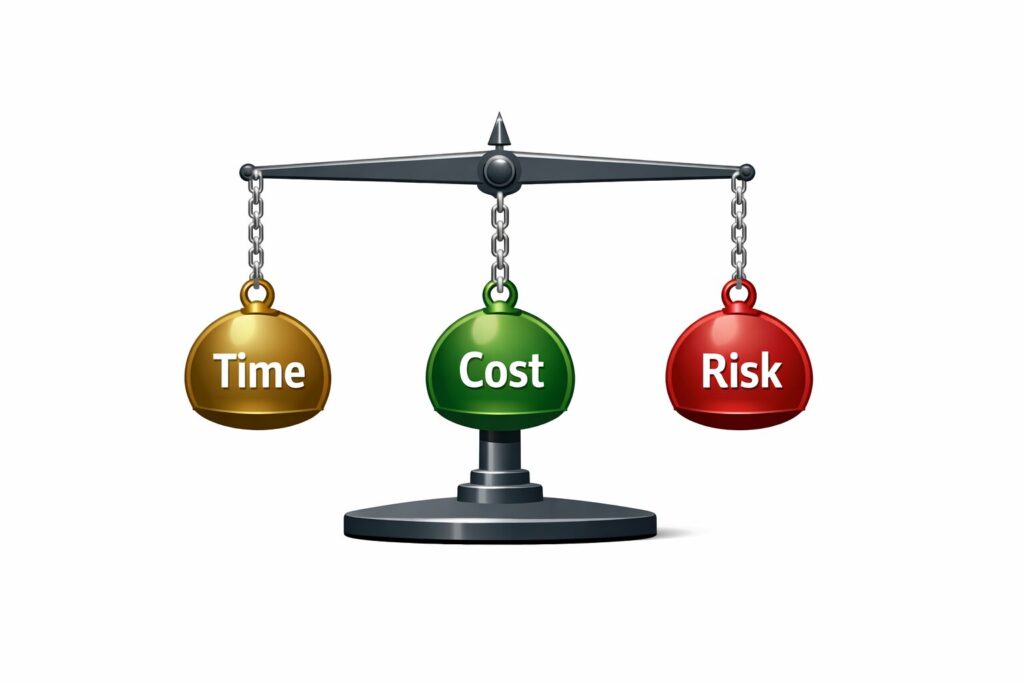
A successful pitch translates the technical benefits of a TTX into direct outcomes related to these three principles. Below is your ready-to-use Value Proposition Talking Points, organized by the key executive stakeholders who need to say “yes.”
Pitching The TTX Value Proposition (By Stakeholder)
For the CFO (Financial Resilience & ROI)
The CFO’s priority is protecting capital and ensuring positive Return on Investment (ROI). They view everything through a cost-benefit lens.
| Talking Point 1: Cost Avoidance (The True ROI) | Talking Point 2: Insurance and Audit Favorability | Talking Point 3: Prioritized Capital Expenditure |
|---|---|---|
| A TTX is not a cost; it’s an insurance policy with guaranteed returns. Our primary goal is to minimize the duration of disruption. We know that every hour of downtime costs us $[insert your company’s actual loss/hour figure]. By clarifying decision-making roles in a TTX, we can shave hours off the response time, turning a potential $5M incident into a $500K incident. | This exercise strengthens our security posture for underwriters. A mature, documented TTX program demonstrates due diligence, which can directly influence our cyber insurance premiums and favorably position us during regulatory audits. | The TTX identifies gaps in our processes, not just technology. This exercise is the single most efficient way to validate our future budget requests. Instead of guessing, the TTX will give us validated, data-driven evidence showing exactly where we need to invest our capital next for maximum defensive impact. |
For the COO (Operational Continuity and Time)
The COO is responsible for efficiency, service delivery, and seamless functioning of business processes. They need proof that the business can execute under stress.
| Talking Point 4: Minimizing Decision Friction | Talking Point 5: Stakeholder Alignment: |
|---|---|
| In a crisis, the delay isn’t the technology; it’s the chain of command. This TTX is a dress rehearsal for your crisis team. We will identify and eliminate friction points in executive decision-making, such as ‘who authorizes the public statement?’ or ‘who approves the wire transfer for recovery?’ This speeds up recovery when seconds count. | TTXs force critical collaboration. We’re bringing Legal, Communications, and HR to the table with IT. This builds muscle memory for cross-functional communications, ensuring all departments speak the same language when operations are threatened. |
For the Board and CRO (Risk Management and Fiduciary Duty)
The board is concerned with high-level strategy, governance, reputation, and meeting their fiduciary responsibilities to stakeholders.
| Talking Point 6: Proving Due Diligence and Governance | Talking Point 7: Protecting Reputation and Trust: |
|---|---|
| A TTX provides demonstrable evidence of active risk governance. When stakeholders or regulators ask, ‘What is the Board doing to manage cyber risk?’, we can point to a recurring program that tests and improves our resilience, fulfilling our fiduciary duty. | The true cost of an incident is the loss of customer trust. Our exercise includes practicing the communications plan. We ensure our message to the market, media, and customers is consistent, empathetic, and rapid. We are rehearsing trust preservation. |
Moving to Action: Your next Step
Your goal is to get your TTX proposal moved from “Review” to “Approved” By using the talking points above, you shift the conversation from a technical cost center to a strategic, risk-mitigation investment.
Your Action Item: Select 3-5 of these talking points that best align with the current strategic goals of your organization and weave them into a one-page executive summary for your proposal.
Need to know exactly what goes into the exercise once it’s approved?
In the next part of this series, we will break down: The Anatomy of a Successful Tabletop Exercise – covering the essential elements, timing, and facilitation techniques that turn a simple discussion into a powerful learning experience using a case study. (Coming March 11th, 2026!)