
With identities now serving as the primary security boundary in hybrid and multi-cloud environments, it’s key to adopt a cloud native identity strategy to protect users, applications, and data.
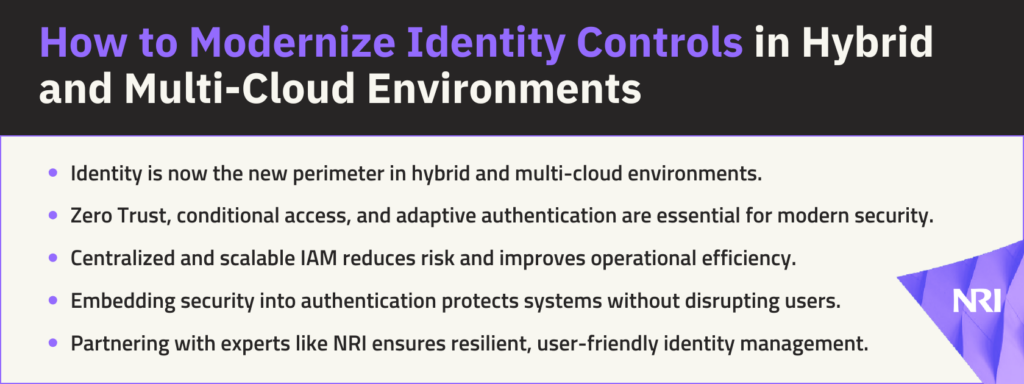
Does your organization still rely on traditional network-based security models to protect systems across hybrid and multi-cloud environments? If yes, you may be leaving critical data, applications, and users exposed.
Research shows that 80% of organizations experienced at least one cloud-related security incident in the past year. Your organization could face similar risks if security strategies continue to rely on perimeter-based defenses designed for centralized infrastructure.
Today, resources span multiple cloud platforms, SaaS applications, and remote devices. This distributed architecture expands the attack surface. Each new cloud service, integration, and remote access point creates another opportunity for identity-based attacks.
Hybrid and multi-cloud environments also introduce complexity that increases identity risk. When access policies vary across platforms, it becomes harder to maintain consistent identity controls and monitor authentication activity.
For this reason, identity strategy must move to the center of modern security architecture. IT leaders increasingly treat identity as the new perimeter that protects users, devices, and applications across distributed environments.
However, modern identity controls must evolve through cloud native strategies such as Zero Trust, conditional access, adaptive authentication, and lifecycle management. Continue reading to see how these approaches can strengthen security while still delivering the seamless access experiences users expect.
Defining a Cloud Native IAM Strategy
A cloud native IAM strategy helps you manage identities across cloud platforms, applications, and on-premises systems. As organizations adopt hybrid and multi-cloud infrastructure, identity systems must maintain secure access while remaining simple to manage.
Building this type of strategy requires focusing on a few core principles.
- Centralizing Identity Across Environments
You need a single identity system that connects cloud services and on-premises resources. By managing identities in a single place, authentication, permissions, and access policies are easier to control.
Centralization also improves visibility. Security teams can see who is accessing what and detect suspicious activity faster. It also reduces the security gaps that emerge when identities reside across multiple systems.
- Designing for Multi-Cloud Interoperability
Most organizations rely on services from several cloud providers. Your identity strategy must work across these platforms without creating separate identity silos.
Interoperable IAM systems allow users to authenticate once and access the resources they need across different cloud platforms. This consistency simplifies administration and helps prevent fragmented access policies.
It also gives your organization flexibility. You can adopt new services without rebuilding identity controls every time your cloud strategy changes.
- Aligning Identity Architecture With Scalability
As organizations grow, the number of users, applications, and access requests increases quickly. Identity systems must scale without creating management challenges.
Automation helps make this possible. Automated provisioning and policy enforcement enable the quick addition of new users and applications while maintaining consistent governance.
As a result, IT teams manage access efficiently even as infrastructure continues to expand.
- Embedding Security into Authentication
In modern cloud architectures, authentication itself becomes a primary security control. Every login request should be verified before access is granted.
Methods such as multi-factor authentication, device verification, and contextual risk checks help confirm that users are legitimate before allowing access to critical systems.
This approach shifts security away from traditional network boundaries and places it directly at the point of access.
A cloud native IAM strategy built on these principles makes identity easier to manage across hybrid and multi-cloud infrastructure. When identity is centralized, scalable, and integrated across platforms, organizations can control access more effectively and reduce identity-related security risks.
Zero Trust and Conditional Access as Foundational Controls
Hybrid and multi-cloud architectures require stronger identity controls than traditional security models can provide. Zero Trust and conditional access help verify every access request and reduce the risk of unauthorized entry.
The following practices show how these approaches strengthen identity security.
- Applying zero trust to user and device verification
Zero Trust assumes that no user or device should receive automatic trust. Verification is a must before granting system access.
You can apply Zero Trust verification through controls such as:
- Identity-based authentication for all users
- Device verification before granting access
- Context checks, such as location and network conditions
- Continuous monitoring of user behavior
With Zero Trust, access decisions rely on verified identity signals rather than network location. Identity-based checks protect resources even when users connect through external networks or personal devices.
- Implementing conditional access policies based on risk signals
Conditional access policies allow you to control access based on risk and context. These policies evaluate multiple signals before allowing or restricting access.
Common risk signals include:
- User location and IP address
- Device health and compliance status
- Login behavior patterns
- Application sensitivity
As a result, systems can adjust access decisions in real time. Low-risk logins proceed as usual, while high-risk attempts trigger stronger authentication requirements.
- Leveraging adaptive authentication for security and user experience
Adaptive authentication strengthens security without creating unnecessary friction. Authentication requirements change depending on the risk level of each login attempt.
For example, low-risk users may only need a standard login. Higher-risk situations may trigger multi-factor authentication or additional identity verification.
This approach improves protection while keeping access simple for legitimate users.
- Continuously validating access instead of granting static trust
Traditional security models often grant access once a user logs in. Zero Trust takes a different approach by validating access throughout the entire session.
Systems should continuously evaluate identity signals such as user behavior, device status, and network changes. If risk increases, access permissions can be automatically limited or revoked.
Continuous validation reduces the likelihood that attackers can maintain long-term access and ensures that trust remains tied to verified identity signals.
Modernizing Identity Lifecycle Management
Identity lifecycle management ensures users receive the right level of access at the right time throughout their relationship with your organization. A modern approach helps manage access efficiently across complex, hybrid, multi-cloud infrastructure.
Stronger identity governance depends on several key practices that support secure and scalable access management.
- Automating provisioning and deprovisioning: Automation grants access quickly when users join and removes it immediately when roles change or users leave.
- Aligning role-based access with organizational changes: Role-based access control (RBAC) assigns permissions based on job responsibilities. Access updates automatically as roles change.
- Enforcing least privilege across cloud platforms: Least privilege limits access to only what users need for their tasks. Fewer permissions reduce the impact of compromised accounts.
- Conducting regular access reviews and certifications: Access reviews confirm users still require their permissions. Certification processes help identify and remove unnecessary access.
Modern identity lifecycle management improves both security and operational efficiency. Automation, role alignment, least privilege, and regular reviews create a stronger and more consistent access framework.
Protecting User Experience While Strengthening Controls
Strong identity security must work without slowing users down. Security controls that disrupt daily work often lead to frustration and workarounds. The following strategies help strengthen protection while keeping access simple for users.
- Seamless single sign-on: Single sign-on (SSO) reduces login friction and simplifies access across multiple applications. Users authenticate once and access authorized systems without having to log in repeatedly.
- Smooth authentication flows: Simple authentication processes reduce unnecessary steps and interruptions. Clear login flows help users stay productive while maintaining security.
- Real-time behavior monitoring: Continuous monitoring of authentication activity enables quick detection of unusual behavior. Early detection allows faster responses to potential threats.
- Clear communication: Clear communication about new security measures helps users understand why changes are necessary. Transparency improves trust and adoption.
Strong identity controls and a smooth user experience must work together. Security strategies that protect access while minimizing friction help organizations maintain both productivity and protection.
Build Resilient Identity Controls With NRI
Modern identity management requires securing access across hybrid and multi-cloud environments without slowing users down. As identities become the new security perimeter, organizations need cloud native strategies that deliver strong protection while maintaining seamless user experiences.
NRI can help you achieve this. Our team works with organizations to design identity solutions tailored to their hybrid and multi-cloud environments and evolving business needs. We help streamline access, strengthen cloud application security, and ensure identity controls scale as infrastructure grows.
With NRI, you gain practical guidance, expert support, and proven frameworks that simplify identity management while strengthening security across distributed systems.
Contact NRI todayto start building a cloud native identity strategy with confidence.