
Turn sustainability into a strategic advantage with green cloud computing.
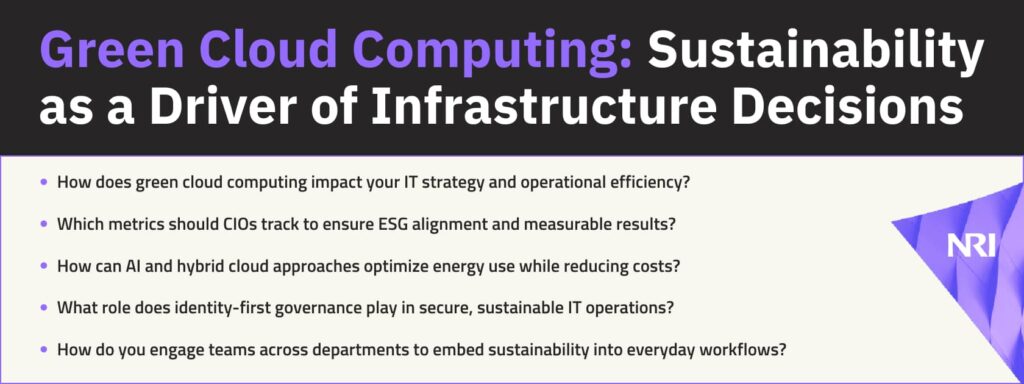
Not long ago, only a handful of organizations paid attention to matters of sustainability goals. They sounded good in reports, but they rarely influenced how IT teams designed or operated their systems. That has changed in a big way. Sustainability is now a board-level priority, shaped by ESG reporting requirements, regulatory pressure, and investors who expect clear evidence of progress.
This shift is especially important for IT because the numbers are hard to ignore. The International Energy Agency estimates that data centers already use about 1% of global electricity, and that usage will continue to climb as AI and digital workloads grow. Decisions about cloud platforms, infrastructure, and workload placement now directly impact a company’s energy use, carbon footprint, and long-term operating costs.
As organizations modernize applications and expand hybrid environments, sustainability becomes a practical design consideration rather than a side conversation. In this article, you will learn how green cloud computing helps IT leaders reduce waste, improve efficiency, and align infrastructure choices with broader sustainability goals.
Why cloud is central to the sustainability equation
If you are working to make your IT environment more sustainable, the cloud is one of the most effective places to start. Cloud platforms offer scale, efficiency, and visibility that traditional on-premises systems simply cannot match.
Most major cloud providers now publish clear details on their renewable-energy use, carbon intensity, and region-level sustainability metrics. This information gives IT leaders a practical way to choose cloud regions based on the local grid’s cleanliness or the availability of renewable power. In other words, the location of your workloads can directly influence your organization’s carbon footprint.
A few advantages stand out:
- Access to cleaner and more efficient data centers.
- Better visibility into the environmental impact of your workloads.
- Tools and dashboards that help you track and reduce energy use.
Hybrid and multi-cloud setups, however, bring their own challenges. When your workloads are spread across different vendors and regions, measuring and managing carbon emissions becomes more difficult. With the right architecture and governance model, these gaps can be addressed.
When approached strategically, cloud adoption can lower costs, reduce energy consumption, and help you meet your sustainability goals. Done well, green cloud computing delivers both environmental benefits and financial value.
Evaluating providers through a green lens
Choosing a cloud provider today means looking beyond performance and pricing. You also need to understand how each provider supports your environmental and compliance goals. This includes reviewing their renewable energy commitments, carbon intensity data, and the efficiency of their data center operations. These details help you see the true impact your cloud strategy has on energy use and sustainability.
As workloads spread across regions and different cloud vendors, maintaining secure and auditable access becomes even more important. Identity-first frameworks give you the visibility and control you need to maintain strong governance while still pursuing greener operations.
Here are practical ways to evaluate providers:
- Compare each provider’s energy efficiency and carbon reporting to your ESG targets.
- Confirm that your security and identity controls function consistently across all cloud environments.
- Review region-level sustainability metrics to understand how workload placement affects your carbon footprint.
Looking at providers through a sustainability lens helps you reduce environmental impact while improving compliance and long-term operational resilience.
AI-enabled optimization for sustainable IT
AI is changing how teams approach green cloud computing. By analyzing your workloads and usage patterns, AI can identify when cleaner energy is available, reduce idle compute time, and automatically adjust resources to match demand. This allows you to lower emissions and reduce cloud spending simultaneously, with immediate, measurable results.
AI can also generate real-time carbon analytics. Instead of relying on estimates or periodic sustainability reviews, you get precise, up-to-date data that supports accurate ESG reporting. This level of visibility makes it much easier to track progress, find areas for improvement, and make decisions that support your sustainability goals.
When you integrate AI into your modernization efforts, you build a more efficient and resilient cloud environment. It becomes easier to optimize resources, reduce environmental impact, and make sustainable choices that fit your broader business strategy.
Governance, compliance, and reporting
Keeping up with new ESG requirements can feel overwhelming, but it also gives you a chance to turn sustainability into a real strength. With identity-first security and zero trust frameworks in place, you can link system activity and energy use to verified user behavior. This creates a reliable foundation for carbon reporting by making your data traceable, accurate, and ready for audit.
Carbon reporting is often seen as a simple compliance task, but it offers far more value. Customers, investors, and regulators want clear, trustworthy disclosures, and organizations that provide them stand out. Transparent reporting shows you are serious about sustainability and back your goals with actual results.
When you combine strong governance with efficient operations, you build trust and show measurable progress toward your ESG targets. It becomes easier to demonstrate leadership, meet expectations, and support long-term sustainability across the business.
Culture and adoption for green IT
A green cloud strategy succeeds when everyone is involved, not just the IT team. Finance, operations, and business units play a major role in making sustainability real. When employees can see the impact of their decisions through dashboards, awareness campaigns, and simple incentives, they start contributing rather than sitting on the sidelines.
Making sustainability part of everyday workflows helps it become part of your organization’s identity. Over time, modernization, cost control, and carbon reduction stop feeling like separate efforts. They become natural outcomes of smarter cloud and infrastructure design.
Here are a few ways to bring your teams on board:
- Align departments so everyone shares the same sustainability goals.
- Use dashboards and incentives to make energy use and impact visible.
- Treat sustainability as part of your culture and innovation strategy, not just a cost-saving measure.
When you take this approach, you encourage collaboration, spark new ideas, and make steady environmental progress across the entire business.
Building a green cloud roadmap
Your path to sustainable cloud operations starts with understanding what you already have. Begin by assessing your current workloads and identifying where the most energy is being used. Once you have that baseline, you can find practical opportunities to cut emissions. This may include shifting workloads to cleaner cloud regions, turning on dynamic scaling to eliminate idle compute, or using AI scheduling to run tasks when demand and carbon intensity are lower.
A strong roadmap focuses on measurable outcomes such as reduced carbon output, lower energy costs, greater workload efficiency, and improved accuracy in ESG reporting. Identity-first security should also be part of the plan so sustainability improvements remain aligned with governance and compliance requirements.
The urgency is clear. Some projections show that by 2025, data centers could use as much as 20% of global electricity and generate more than 5% of worldwide emissions. This makes sustainability a strategic priority for IT leaders. With a clear plan in place, you can connect your cloud decisions to ESG goals while improving efficiency and controlling costs.
As a CIO, embedding sustainability into your IT roadmap is a strategic advantage. Prioritizing green cloud computing helps you drive performance, reduce energy costs, and strengthen your organization’s reputation with investors, customers, and regulators.
Forward-thinking IT leaders treat sustainability as integral to modernization, leveraging AI, hybrid cloud strategies, and identity-first security to achieve measurable results while staying compliant and efficient.
Turning green cloud goals into actual results
Sustainability is now a core part of IT strategy, influencing everything from architecture to vendor selection. CIOs are expected to reduce environmental impact while improving performance, which makes green cloud computing an essential part of modern infrastructure planning.
AI and identity-first security make these goals easier to reach. AI helps eliminate wasted energy, optimize workloads, and support accurate ESG reporting, while strong identity controls ensure governance and data protection stay intact as you modernize.
NRI helps IT leaders build cloud and infrastructure roadmaps that deliver measurable efficiency and sustainability gains. If you are ready to create a green cloud strategy that strengthens both environmental and business outcomes, contact us today for expert support.